Home ﹥ latest news > News and Information > Facing the Labor Shortage Era: Exploring the Future of Unmanned Dining through "See You Noodles" 2025-04-15
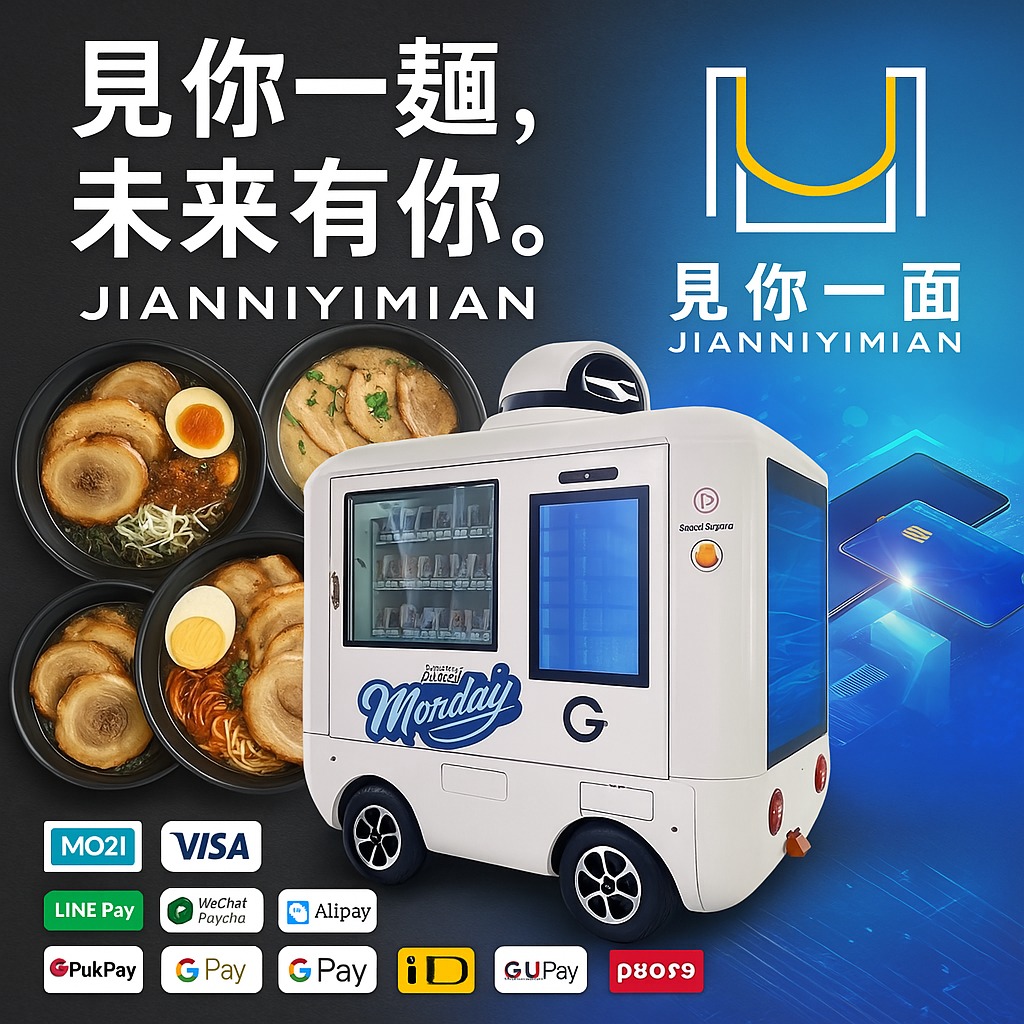
Facing the Labor Shortage Era: Exploring the Future of Unmanned Dining through "See You Noodles"
1. Industry Landscape: Declining Birthrate and Labor Shortage as Ongoing Challenges
Starting in 2025, Singapore continues to grapple with the challenges of an aging society and declining birthrate. According to national statistics, the proportion of the working-age population is steadily decreasing, while the demand for service industry labor remains high. This demographic shift places significant strain on labor-intensive sectors such as the service and food industries.
Data from industry reports indicates that small and medium-sized food service operators across Singapore commonly face the following issues:
-
Long working hours and physically demanding environments leading to high turnover rates.
-
Unstable sources of temporary labor and insufficient scheduling flexibility.
-
Difficulty in staffing during holidays and late-night hours.
-
Challenges in attracting young workers to on-site positions, even with high wages.
Additionally, food delivery platforms, which previously helped alleviate labor shortages, are now experiencing dispatch difficulties and a lack of delivery personnel, indicating that even the "platform economy" is not immune to labor shortages.
2. Technological Response: Replacing Repetitive Manual Processes with Intelligent Equipment
In response to these industry challenges, Youjie Electronics Technology initiated the development of an "Automated Hot Food Vending System" in 2021. After two years of development and field testing, the "See You Noodles" automated vending system was officially launched in 2023.
The core objective of this system is to provide a stable, safe, and 24/7 unmanned hot food solution, with key technological features including:
-
Modular food preservation and zoned heating design: Separately storing soup base, main ingredients, and side dishes to maintain freshness and reduce cross-contamination risks.
-
On-site heating completed within 90 seconds: Utilizing steam and heat conduction control technology to ensure rapid, high-temperature food delivery.
-
Long-cycle, low-maintenance operation: Equipment can run continuously without human intervention for at least two months, requiring only periodic restocking based on food shelf life.
-
Real-time remote monitoring and diagnostics: Employing IoT technology to monitor inventory, temperature, and malfunctions, with automatic maintenance alerts.
-
Multi-payment integration module: Supporting 21 payment methods, including credit cards, mobile payments, and international e-wallets.
This system not only reduces labor costs but also enhances the stability and predictability of food supply, effectively mitigating operational risks associated with traditional "labor bottlenecks."
3. Strategic Model: Platform-Oriented Operations to Lower Adoption Barriers
Unlike traditional vending machines that primarily generate revenue through equipment sales, "See You Noodles" adopts a Platform as a Service (PaaS) model, offering the following collaboration options:
-
Equipment leasing and operational licensing: Providing standardized deployment services for corporate venues and chain channels.
-
Brand co-operation and project development: Collaborating with food brands to design menu modules and expand market reach.
-
Data integration and feedback reports: Supplying daily sales, usage periods, and payment preferences data to assist in operational optimization.
Furthermore, contract designs incorporate "lease termination guarantees" and "purchase conversion mechanisms," enabling partners to conduct low-risk trial operations during the initial adoption phase and flexibly adjust strategies based on revenue outcomes.
4. Application Scenarios: From High-Density Areas to Underserved Regions
One of the core values of "See You Noodles" lies in its highly flexible deployment capabilities and unmanned operational conditions, allowing for widespread application in various locations where labor is scarce or demand is dispersed.
-
In commercial office buildings and industrial parks, these venues house large numbers of office workers, leading to severe lunchtime queues and gaps in food service during evenings and holidays. Deploying automated vending equipment can help fill these gaps, enhance overall service quality, and extend operating hours.
-
University campuses and student dormitories represent another key application area. Students have dispersed meal times and late-night dining needs, which traditional student cafeterias cannot fully accommodate, leading students to rely on convenience stores or delivery services. The quick heating and 24/7 vending features of "See You Noodles" help address this gap.
-
In transportation hubs and transit centers, such as MRT stations, airports, and bus terminals, there is often unmet demand from travelers during nighttime or early morning hours. Automated hot food vending equipment can provide immediate, reliable hot meal options during unmanned service periods, enhancing the added value of these venues.
-
Industrial zones, factories, and shift-based workplaces are also well-suited for deployment. During night shifts and holiday duties, arranging fixed food service personnel is challenging. The unmanned and long-term operational capabilities of "See You Noodles" equipment effectively address the dietary needs of on-duty employees, further improving employee satisfaction and work efficiency.
-
Finally, in aging communities and care facilities, elderly individuals have fixed meal times and limited mobility, while on-site human resources are constrained. Installing unmanned hot food vending equipment not only alleviates the burden on caregivers but also provides warm, hygienic, ready-to-eat meal options for the elderly population.
5. Collaboration and Investment Strategy: Building a Cross-Industry Food Technology Ecosystem
Youjie Electronics is actively seeking various strategic collaborations and external investment opportunities to expand deployment capabilities across Singapore and overseas, as well as accelerate platform module development.
-
In terms of brand collaboration, we welcome food service providers to jointly develop co-branded menus and promote them through our equipment to more channel venues.
-
For venue collaboration, we invite large commercial offices, communities, and station operators to adopt our equipment through partnerships to enhance service quality and traffic conversion rates.
-
Regarding investment cooperation, Youjie Electronics offers equity-based investments and joint operation models, with planned use of funds for module production expansion, cold chain technology upgrades and overseas market expansion.
Since 2024, we have established contact with distribution partners in Japan, Malaysia, and Singapore, and are currently conducting regulatory compliance checks and operational tests, with a pilot deployment in Southeast Asia expected to launch in 2026.
6. Conclusion: Leveraging Technology to Respond to Structural Shifts and Redefine Foodservice Logic
As one of the industries in Singapore long dependent on human labor, the food and beverage sector now faces multiple challenges including population aging, labor shortages, and changing labor patterns. "See You Noodles" is not merely a hot food vending machine, but a reimagined operational framework that reduces reliance on labor, enabling operators to manage businesses with lower costs and risks.
By integrating modular supply chains, intelligent monitoring systems, and long-lasting preservation technologies within a service-oriented platform, we are building a future-ready foodservice model.
We firmly believe that leveraging automation to fill labor gaps and ease operational burdens is not just a market strategy—it is a fundamental response to structural transformation.